


[The birth of a new ETF is an incredibly exciting time for asset managers but also a treacherous endeavor if strategic planning around the launch is not fully thought-out, developed, and implemented. For many managers, enthusiasm can lead to an optimistic “if we build it, they will come” mindset; a focus on the actual launch as the endpoint (not just the beginning); and the expectation of a natural siphoning-off of the surging growth in ETF assets.
The reality is that despite the surging growth of global ETF assets reaching a record $23.09 trillion through June 2026 and attracting $1.33 trillion of net inflows (the highest first-half total on record), the top three sponsors (iShares/BlackRock, Vanguard, State Street) controlled about 59% of global ETF assets, despite more than 1,000 ETF providers globally.
It is also important that managers track how fast the market now closes funds that fail to gather assets. Nearly 1,000 active ETFs were launched in 2025, while 146 active ETFs (a record high) and 86 passive ETFs were liquidated. ETF issuers are shutting products at the fastest pace in years, and the average lifespan of an ETF liquidated in 2026 has fallen to one year and nine months, down from three and a half years in 2025 and nearly five years in 2024, according to Bloomberg Intelligence, as reported by Wealth Management. Issuers increasingly set an explicit clock, closing a fund that is not gaining traction within 12 to 18 months and recycling the resources.
Cerulli also found that since 2021, more than 85% of ETF closures have involved funds with less than $50 million in assets, and that this proportion reached 92% in 2025. They similarly noted that issuers are becoming quicker to shut down products that fail to gather assets and warned that the rapid proliferation of new strategies increases the risk of a future “closure wave.”
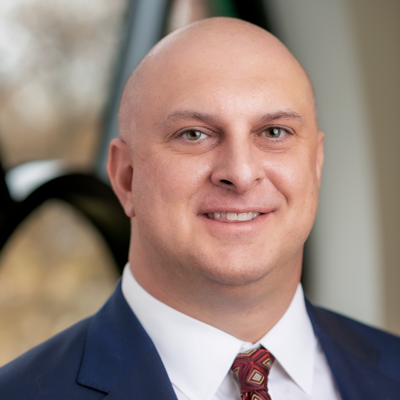
To better understand the current ETF marketplace dynamic and strategic decisions needed behind successfully launching and growing a new ETF, we reached out to Dan Sondhelm of Sondhelm Partners. Dan brings 30 years of experience in marketing and sales for asset managers, including ETF sponsors, and built Sondhelm Partners over the past 10 years; helping boutique managers and RIAs get noticed, earn distribution, and gather assets. His firm was shortlisted for PR Campaign of the Year in the 2026 “With Intelligence Mutual Fund and ETF Awards” and as Best PR and Communications Firm in the 2024 “ETF Express US Awards”. We asked Dan to share his perspectives and experiences in helping firms launch their ETFs and knowing what strategic decisions they have to make.]
Hortz: What do ETF sponsors most underestimate?
Sondhelm: They underestimate how hard it is to get noticed. A good strategy isn’t enough. Most first-time sponsors assume that a better product will find its own audience, and that assumption costs them more than anything else they get wrong.
Firms spend months designing ETFs and almost no time on how anyone finds them. Shelf space is limited. Gatekeepers control access, and getting approved does not mean money follows. What determines whether an ETF works is decided long before performance means anything, and most of it is marketing, distribution, and patience.
The other problems compound from there. Sponsors underestimate how long distribution takes, so their asset targets are wrong from day one. They do not account for how crowded the category is, so a strategy that feels distinctive to them looks interchangeable to an investor. They budget for the launch and not for the years after it, which is when assets are actually gathered. And many of them are entering a market they have never sold into, with a sales approach built for a different buyer.
Hortz: With the top three sponsors controlling nearly 60% of ETF assets, how does a boutique firm compete against that?
Sondhelm: You don’t. Not on their terms. If you are trying to win the same broad-market allocation that goes to a three-basis-point S&P fund, you have already lost, because that decision was made years ago and it was not about you.
What a boutique has is the ability to be the best answer to a narrow question. The large sponsors are built for scale, which means a strategy that could gather $200 million is not worth their attention. For you, that’s a business. The question is what you can own that BlackRock has no reason to want.
Advisors also are not looking for another large-cap fund. They are looking for the piece of the portfolio they cannot fill with something obvious, and that is where a specialist manager gets considered. But they have to know you exist first, which is the part most boutiques underestimate. The big firms have distribution, brand, and a wholesaler in every territory. You have your expertise and whatever visibility you are willing to build. That’s a fair trade only if you build it.
Hortz: Why do so many ETFs fail to stand out?
Sondhelm: Most of them are not as different as their managers think. You built the strategy, so the distinction is obvious from where you sit. The advisor or the gatekeeper, on the other hand, is looking at your fund next to hundreds of alternatives, and from that seat it often disappears. Before you launch, you should be able to answer three questions in one sentence each:
- Why does this ETF exist?
- What investor problem does it solve?
- Why doesn’t another ETF already solve that problem?
I sat with a manager once who spent the first twenty minutes of our meeting explaining why his fund was different. He was right. His process weighted holdings by something no one else in his category was using, and by the end I understood why it mattered. Then I asked him to say it in a sentence, and he couldn’t. He kept starting over and reaching for another chart. That fund had a real edge and no way to hand it to anyone. An advisor gives you thirty seconds. A gatekeeper skimming a one-pager gives you less. Whatever does not survive that trip is, in practical terms, not a differentiator.
The second reason is that performance does not speak for itself. Managers wait for the numbers to make the case, and the numbers cannot do it alone. Nobody buys or recommends a fund they have never heard of, and the advisors who have heard of it still need to understand where it fits in a client portfolio before they will use it. That takes education, visibility, and time, and none of it happens on its own.
Hortz: How early should marketing begin, and how much should it shape the product itself?
Sondhelm: Marketing should begin before the fund exists, not after it launches. The mistake I see most is a firm building the ETF first and then asking who it’s for. By then the decisions that determine whether it sells are already locked in.
What makes ETFs different is that many firms launching one are adding a new line of business. They already run wealth management or asset management and have never brought an ETF to market. The strategy, the process, and the people are often the same. The market is not. Advisors and retail investors buy ETFs in a completely different way than high-net-worth clients buy holistic wealth management, or institutions buy money management. Same firm, same expertise, but a new buyer with a different process.
That is where marketing has to shape the product, not just promote it. Before you file, you need to know the niche you are serving, who actually puts it in a portfolio, and how you grow it beyond the founder, friends, family, and existing clients who seed most launches. That last question is the one firms skip, and it’s the one that determines whether the fund gets past its first $20 or $30 million. The answers often change the fund itself, how you position the strategy, who you build it for, even the name and ticker.
And you have to be honest about the team. A firm that has sold wealth management or institutional strategies for years may have no one who has sold an ETF. The sales and marketing muscle for this market is different, and most firms launching their first ETF do not have it yet.
Hortz: What are the issues that ETF sponsors need to be aware of in dealing with industry investment gatekeepers?
Sondhelm: Gatekeepers matter more than investors. ETF marketing is mostly a gatekeeper problem, and the gatekeepers are RIAs, wirehouses, broker-dealers, TAMPs, model portfolio platforms, and due diligence committees. The end investor is rarely your first customer. The gatekeeper is.
Approval also takes far longer than sponsors expect. They plan in weeks. It often runs months, sometimes past a year. Asset targets built on the shorter timeline are wrong before anyone starts.
Part of it is timing. Part of it is whether they will add the fund at all. Gatekeepers do not have unlimited shelf space, so they weigh why they would take on your ETF and whether it earns a spot. A minimum asset level is common, and $100 million is a familiar bar. But clearing it guarantees nothing. Plenty of $100 million ETFs never get on, because every platform sets its own criteria. On some platforms, a new fund only gets added if a similar one comes off to make room. The analysts do their homework, but their process runs on limited shelf space, not on your launch timeline.
One ETF we worked with had about $90 million and was talking to a large wirehouse whose minimum was $100 million. The founder added enough to clear it and was on the platform within three months. Not every founder can do that. Sometimes the difference between shortlisted and approved is a business decision, not a marketing one.
So, build the relationship before you need the approval. Gatekeepers are evaluating the firm and the people behind the fund, not just the track record.
Hortz: Can you walk us through your approach to marketing an ETF?
Sondhelm: Start by owning a topic. Pick the area where you have something to say that other managers do not and become the person advisors associate with it. Then teach rather than sell. Explain the problem the strategy solves, what you see in the market, why you built the fund the way you did. Articles, videos, guides, interviews, webinars, all of it works. The format matters less than whether an advisor comes away understanding something new.
That content starts on your website. Your site is the one channel you control, and everything else should point back to it. From there it moves out to where advisors already spend their time, whether that’s LinkedIn, industry publications, podcasts, or their inbox.
Search is what makes any of it findable. Most advisors research a problem long before they know your fund exists, and more of them now ask an AI assistant instead of typing into Google. If your content answers the question they are asking, you appear in both places, and every article and mention builds the reputation that search engines and AI tools read when they decide who to cite.
PR does something your own content cannot do for you. A quote in a trade publication or an interview with a reporter is a third-party vouching for you, and advisors weigh that differently than anything on your website. It builds visibility and credibility at the same time.
All of this serves one purpose. The advisor, the investor, and the gatekeeper each take months to decide, and they rarely tell you where you stand. What you are doing in between is staying in front of them, so that when they are ready to act, or when the due diligence committee finally gets to your fund, you are familiar rather than unknown. If you have salespeople, this is what supports them. Marketing keeps touching the prospect when your sales team isn’t in the conversation, and each new piece gives them a reason to reach out that is not just checking in.
Then measure. A tech stack like HubSpot lets you see engagement, click-through, lead quality, how people move through your site, and what each campaign returns. That data tells your salespeople when to call. An advisor who just read two pieces on your strategy and opened your last email is a different prospect than one who has not touched anything of yours in six months.
Hortz: What do you believe most separates the ETF sponsor winners from the losers?
Sondhelm: Commitment to engaging the audience. You can usually tell which group a sponsor belongs to within the first year, and it has almost nothing to do with performance.
They can say why the fund exists in one sentence. Instead of chasing every channel at once, they pick one and go deep. Gatekeeper relationships get built before the approval is needed. And, the marketing keeps running for years, because that is how long it takes.
The ones that struggle expect the numbers to do the selling. They copy a strategy that already exists, wait until after launch to think about marketing, and expect assets on a timeline nobody in distribution would recognize. When the flows don’t come in the first year, they decide the market rejected the fund. Usually, the market never knew it was there.
Hortz: Any final advice for a firm getting ready to launch its first ETF?
Sondhelm: Portfolio construction matters far less than most sponsors think. What matters is whether anyone knows the fund exists. Whether they understand the problem it solves. Whether they can buy it at all. Most sponsors budget for the first year and assume the rest will take care of itself.
In a market this crowded, your marketing, your brand, and your message are what get you seen at all. Plan the launch like a three-year business build, not a product release.
The Institute for Innovation Development is an educational and business development catalyst for growth-oriented financial advisors and financial services firms determined to lead their businesses in an operating environment of accelerating business and cultural change. We operate as a business innovation platform and educational resource with FinTech and Financial Services firm members to openly share their unique perspectives and activities. This interview is for informational purposes only. The goal is to build awareness and stimulate open thought leadership discussions on new or evolving industry approaches and thinking to facilitate next-generation growth, differentiation, and unique client/community engagement strategies. The Institute was launched with the support and foresight of our founding sponsors — Ultimus Fund Solutions, FLX Networks, ETF Global, Advisorpedia, Pershing, Fidelity, Voya Financial, and Charter Financial Publishing (publisher of Financial Advisor and Private Wealth magazines).
Institute for Innovation Development - www.innovationdevelopment.org - @innovationIID - IID©2026





.jpg)
